Singapore is introducing additional protection for borrowers who take unsecured loans from licensed moneylenders.
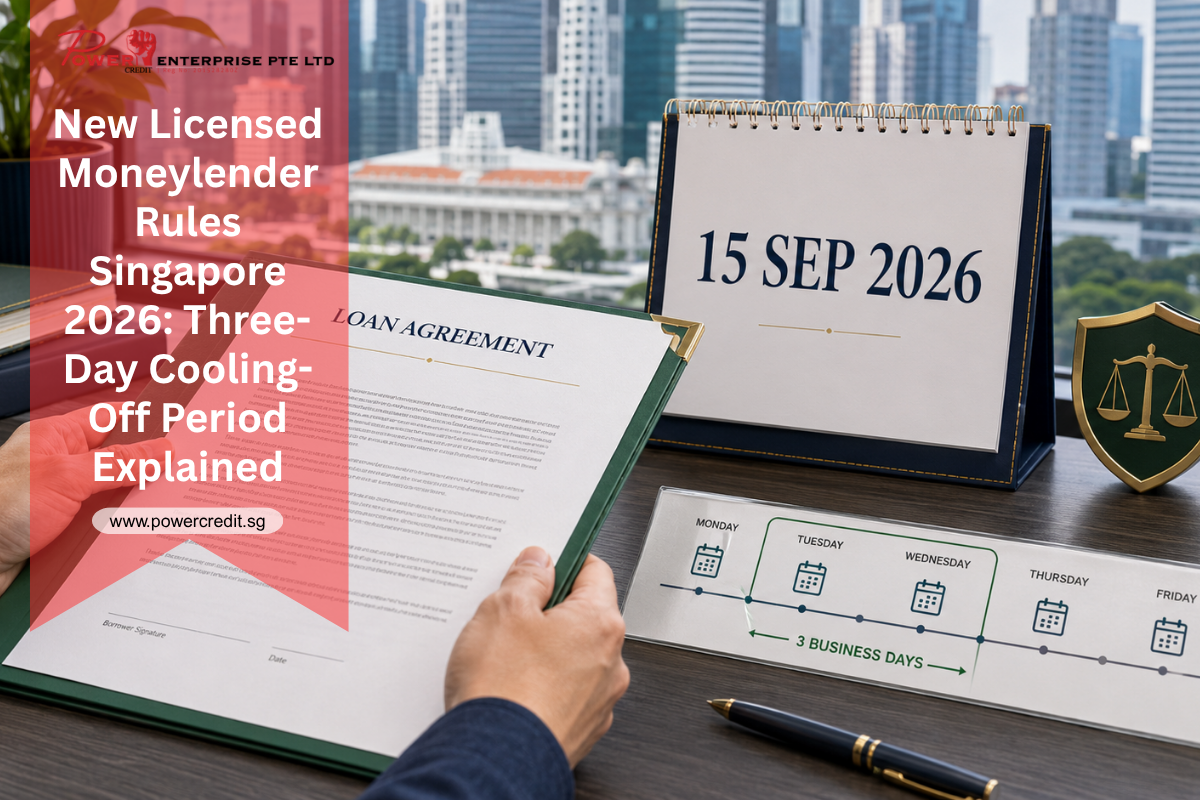
From 15 September 2026, eligible borrowers will have a mandatory cooling-off period of three business days. During this period, a borrower may cancel a qualifying loan at a reduced cost if they reconsider their decision.
The new licensed moneylender rules in Singapore for 2026 are intended to give borrowers more time to review whether a loan is necessary and affordable. However, the borrower must still return the money disbursed, and the licensed moneylender may retain a limited portion of the original loan approval fee.
This guide explains what is changing, which loans are covered, how the cancellation amount is calculated and what borrowers should do if they want to use the cooling-off period.
Key Points at a Glance
- The new rule takes effect on 15 September 2026.
- The cooling-off period lasts for three business days.
- Saturdays, Sundays and Singapore public holidays are excluded.
- It applies to unsecured loans from licensed moneylenders, except business loans.
- An eligible borrower can cancel the loan during the cooling-off period.
- No interest will be charged for a qualifying cancellation.
- The borrower must return the amount received.
- The lender may retain a limited portion of the loan approval fee.
- The total cancellation repayment cannot exceed the original loan principal.
What Is Changing on 15 September 2026?
Before the new framework, when a borrower cancelled a loan, a licensed moneylender could retain the full loan approval fee together with any interest that had accrued.
Under the new rules, when an eligible borrower cancels a loan within the cooling-off period:
- No interest will be charged.
- The lender can retain only a limited portion of the approval fee.
- The amount retained is subject to prescribed limits.
- The total repayment cannot exceed the original principal.
The change gives borrowers an opportunity to reconsider the loan while allowing licensed moneylenders to recover part of the administrative and due-diligence costs already incurred.
Before and After the New Cooling-Off Rule
| Area | Before the new framework | From 15 September 2026 |
|---|---|---|
| Cooling-off period | No mandatory three-business-day period | Three business days for eligible loans |
| Interest on cancellation | Accrued interest could be retained | No interest for a qualifying cancellation |
| Loan approval fee | Full approval fee could be retained | Only a limited portion may be retained |
| Business loans | Subject to their contractual terms | Excluded from the cooling-off framework |
| Amount received | Must be returned | Must still be returned |
| Maximum repayment | Based on applicable contractual amounts | Cannot exceed the original principal for qualifying cancellation |
What Is a Three-Business-Day Cooling-Off Period?
A cooling-off period is a limited period during which a borrower may reconsider a financial agreement after entering into it.
Under the new licensed moneylender rules, the period lasts for three business days.
Business days do not include:
- Saturdays
- Sundays
- Public holidays in Singapore
Borrowers should not automatically assume the final cancellation date. If you wish to cancel, contact the licensed moneylender immediately and ask for written confirmation of the applicable deadline.
Acting early also provides time to obtain the repayment calculation and return the required funds before the process is completed.
Which Loans Are Covered?
The cooling-off period applies to unsecured loans from licensed moneylenders, other than business loans.
Examples may include:
- Unsecured personal loans
- Payday loans
- Monthly instalment loans
- Foreigner loans for personal expenses
- Other unsecured consumer loans
An unsecured loan does not require the borrower to pledge an asset, such as a property or vehicle, as collateral.
For more information about this form of financing, read Power Credit’s guide to a personal loan in Singapore.
Which Loans Are Not Covered?
The new cooling-off framework excludes business loans.
Borrowers should also avoid assuming that every agreement is automatically covered. The classification, purpose and terms of the loan may affect whether the cooling-off provisions apply.
If you are uncertain, ask the lender to confirm:
- Whether the loan is unsecured
- Whether it is classified as a consumer or business loan
- When the cooling-off period began
- When the cooling-off period ends
- What amount must be returned for cancellation
How Much Can a Licensed Moneylender Retain?
The amount that a licensed moneylender may retain depends on the principal amount of the loan.
Loans of S$5,000 or less
For a loan with a principal amount of S$5,000 or less, the licensed moneylender may retain a maximum of S$50.
The retained amount cannot exceed the approval fee originally charged.
For example, if the approval fee was S$40, the lender cannot retain S$50. The amount would be limited to S$40.
Loans above S$5,000
For a principal amount of more than S$5,000, the licensed moneylender may retain up to 3.5% of the loan principal.
Once again, the amount retained cannot exceed the approval fee actually charged.
If 3.5% of the principal is S$350 but the original approval fee was only S$200, the maximum that may be retained is S$200.
What Must the Borrower Repay?
A borrower who cancels a qualifying loan must return:
- The remaining amount actually disbursed after the upfront loan approval fee was deducted; and
- The permitted portion of the approval fee that the licensed moneylender may retain.
No interest will be charged for an eligible loan cancelled during the cooling-off period.
The total amount repaid also cannot exceed the original principal amount.
Example 1: Cancelling a S$1,000 Loan
A borrower takes a loan with a principal amount of S$1,000.
If a 10% approval fee of S$100 is deducted upfront, the borrower receives S$900.
The borrower decides to cancel the loan within the three-business-day cooling-off period.
The lender may retain up to S$50 because the loan principal is S$5,000 or less.
The borrower would therefore repay up to:
- S$900 received; plus
- S$50 permitted from the approval fee.
Maximum repayment: S$950
No interest would be charged for the qualifying cancellation.
Example 2: Cancelling a S$10,000 Loan
A borrower takes a loan with a principal amount of S$10,000.
An approval fee of 2%, or S$200, is deducted upfront. The borrower receives S$9,800.
For a loan above S$5,000, the maximum fee-retention limit is 3.5% of the principal. In this example, 3.5% would be S$350.
However, the actual approval fee was only S$200. The lender cannot retain more than the fee originally charged.
The borrower would repay:
- S$9,800 received; plus
- S$200 retained from the approval fee.
Maximum repayment: S$10,000
No interest would be charged for the qualifying cancellation.
How to Request Cancellation During the Cooling-Off Period
Borrowers who want to cancel should act promptly and communicate directly with the licensed moneylender.
Step 1: Notify the lender
Inform the lender clearly that you want to cancel the loan under the three-business-day cooling-off provision.
Use the lender’s official contact number, email address or office channel. Avoid communicating with unverified individuals.
Step 2: Confirm eligibility and the deadline
Ask the lender to confirm that:
- The loan is covered by the cooling-off framework
- The cancellation request is within the permitted period
- The lender has recorded the date and time of the request
Step 3: Request a written calculation
The cancellation breakdown should show:
- Original principal amount
- Approval fee charged
- Amount disbursed
- Amount of the approval fee retained
- Interest charged
- Total amount to be returned
For a qualifying cancellation, the interest shown should be zero.
Step 4: Return the required amount
Follow the licensed moneylender’s official payment instructions. Verify the bank-account or payment details before transferring any funds.
Step 5: Obtain a receipt
The receipt should state the payment date, amount paid and the loan account or agreement to which the payment applies.
Step 6: Request written closure confirmation
Ask the lender to confirm that the loan has been cancelled and that there is no remaining balance under the cancelled agreement.
Keep all documents and correspondence for your records.
Cooling-Off Cancellation Is Not the Same as Keeping the Money
A common misunderstanding is that cancellation allows the borrower to keep the funds received.
This is incorrect.
The cooling-off period provides a way to end the loan at a reduced cost. It does not turn the disbursed funds into a grant or waive the borrower’s responsibility to return them.
The borrower must be able to return the required cancellation amount. If the funds have already been spent, completing the cancellation may become more difficult.
Borrowers should therefore avoid using the money immediately if they remain uncertain about whether they need the loan.
What Happens After the Three Business Days?
If the cooling-off period has ended, the special reduced-cost cancellation provisions may no longer apply.
The original loan agreement and repayment schedule may continue to govern the account. Interest and other permitted charges may also apply according to the contract and prevailing regulations.
A borrower who wants to repay the loan after the cooling-off period should request an early-settlement statement rather than assuming that the same cancellation calculation will apply.
Do not stop making repayments unless the lender has confirmed another arrangement in writing.
Why the New Rule Matters to Borrowers
People often take loans while dealing with urgent financial pressure. The need to settle a medical bill, household repair, rent shortfall or family expense can make it difficult to assess the longer-term impact of a loan.
After receiving the funds, the borrower may discover that:
- The expense can be delayed
- A smaller amount is sufficient
- Another form of assistance is available
- The repayment would place too much pressure on the household budget
- The loan is no longer necessary
- Existing debts should be managed before taking another loan
The cooling-off period provides time to reconsider these issues without incurring interest on a qualifying cancellation.
What to Check Before Signing a Loan Agreement
The new cooling-off period is an additional safeguard, but it should not replace careful borrowing.
Check the principal and amount disbursed
The principal is the amount stated in the loan agreement. The amount received may be lower because an approval fee can be deducted upfront.
Review the repayment schedule
Make sure you understand the number of instalments, repayment dates and amount due for every instalment.
Calculate your essential expenses
Account for housing, utilities, food, transport, insurance, family commitments and existing debts before deciding what repayment is affordable.
Understand every permitted charge
Check the interest rate, approval fee, late interest, late-payment fee and total repayment amount.
Borrow only what you need
A higher approved limit does not mean that taking the maximum amount is appropriate.
Verify the lender
Deal only with a company listed in the Ministry of Law’s Registry of Moneylenders. Confirm that the business name and office address match the official record.
Power Credit provides further borrower guidance on its notes to borrowers page.
Choosing a Licensed Moneylender in Singapore
A properly licensed moneylender must operate within Singapore’s moneylending regulations and explain the loan agreement before it is signed.
Borrowers should expect:
- Clear disclosure of the principal and amount disbursed
- An explanation of interest, fees and repayment terms
- A copy of the signed loan agreement
- Receipts for repayments
- Verification at the lender’s registered business premises
- Professional handling of personal information
- No request for the borrower’s Singpass password
Learn more about verification and regulated borrowing through Power Credit’s licensed moneylender Singapore guide.
Frequently Asked Questions
When does the new cooling-off period take effect?
The new rule takes effect on 15 September 2026.
How long is the cooling-off period?
It lasts for three business days. Saturdays, Sundays and Singapore public holidays are excluded.
Does the rule apply to personal loans?
It applies to qualifying unsecured personal loans taken from licensed moneylenders.
Are business loans included?
No. Business loans are excluded from the cooling-off framework.
Is loan cancellation completely free?
Not necessarily. No interest will be charged for a qualifying cancellation, but the lender may retain a limited portion of the original approval fee.
How much of the approval fee may be retained?
For loans of S$5,000 or less, the maximum is S$50. For loans above S$5,000, the maximum is 3.5% of the principal. The retained amount cannot exceed the approval fee actually charged.
Must the borrower return the money received?
Yes. The borrower must return the amount disbursed together with the permitted portion of the approval fee.
What documents should borrowers keep?
Keep the loan agreement, cancellation request, repayment calculation, payment receipt and written closure confirmation.
Additional loan questions are covered on Power Credit’s licensed moneylender FAQ page.
Final Thoughts
The new licensed moneylender rules in Singapore for 2026 introduce an important safeguard for consumers taking unsecured loans.
From 15 September 2026, eligible borrowers will have three business days to reconsider and cancel their loans at a reduced cost. No interest will be charged for a qualifying cancellation, although the funds disbursed and a limited part of the approval fee must still be returned.
Borrowers should contact their lender immediately if they wish to cancel, obtain the settlement calculation in writing and keep all related records.
Power Credit Enterprise Pte Ltd is a licensed moneylender in Singapore. Our team is committed to explaining loan terms, fees and repayment obligations clearly before an agreement is signed. Contact Power Credit directly if you require clarification concerning an existing Power Credit loan and the new cooling-off framework.
This article is for general information only and does not constitute legal or financial advice. Borrowers should refer to their loan agreements and the latest official information issued by the Ministry of Law.